
What they are, why they happen, and how they are treated
Haemorrhoids (Piles)
Haemorrhoids, commonly called piles, are swollen blood vessels in the lower rectum or anus. They are very common, often harmless, and usually treatable — but because bleeding and discomfort can also point to other conditions, symptoms are always worth checking. This guide explains what causes haemorrhoids, the symptoms to watch for, and the treatment options available at Dr. Chan Siew How’s clinic at KPJ Damansara, from simple measures to laser haemorrhoidoplasty.
THE BASICS
What are haemorrhoids?
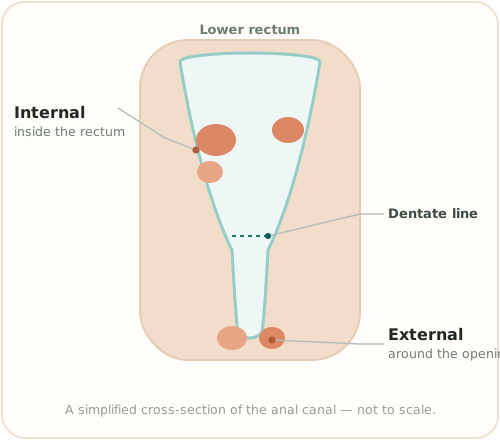
Haemorrhoids develop when the blood vessels around the anus and lower rectum become swollen and stretched. They are grouped by where they form:
Internal haemorrhoids
Form inside the rectum. They are usually not visible and often painless, but may bleed or, if larger, push outside the anus (prolapse).
External haemorrhoids
Form under the skin around the anus. These can be felt as a lump and may become painful, especially if a blood clot forms inside (a thrombosed haemorrhoid).
WHY THEY HAPPEN
What causes them?
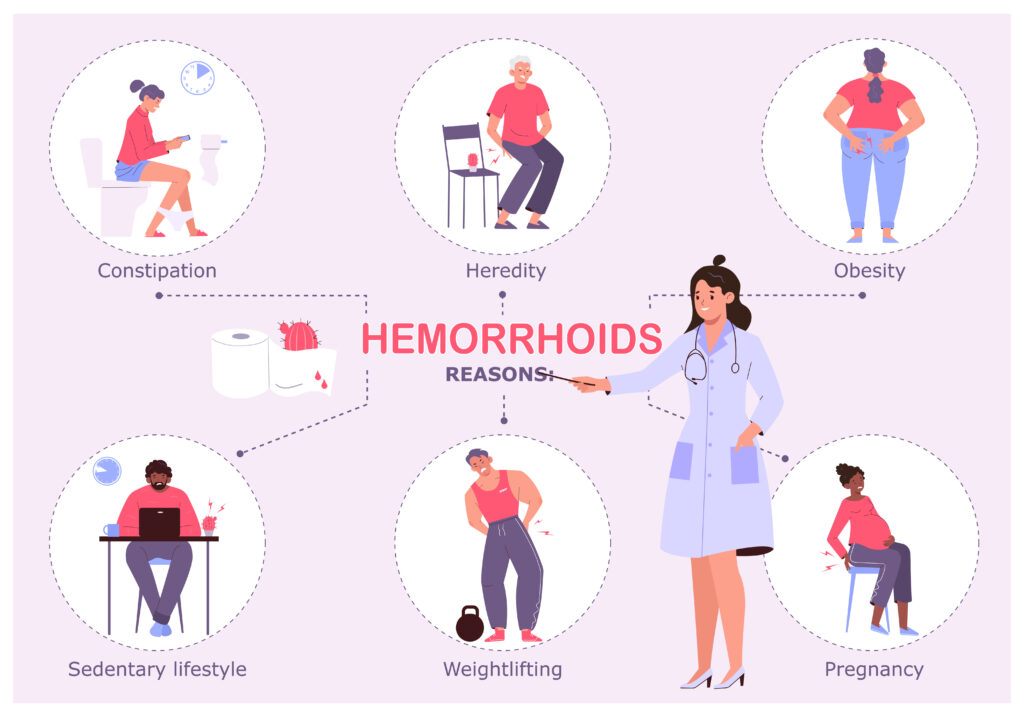
Haemorrhoids are linked to increased pressure in the lower rectum. Common contributing factors:
- Straining during bowel movements
- Pregnancy and childbirth
- A low-fibre diet
- Ageing, as supporting tissue weakens over time
- Chronic constipation or diarrhoea
- Prolonged sitting, including long periods on the toilet
- Being overweight
How they are classified
Grading of internal haemorrhoids
Internal haemorrhoids are often described in four grades, which help guide treatment:
Grading is assessed during examination. Treatment depends on grade, symptoms, and individual factors. Dr. Chan will explain which applies to you.
Symptom quick-reference
Common symptoms
Haemorrhoids can show up in several ways. Here is what patients most often describe:
Bleeding
Bright red blood during or after a bowel movement
Lump
Swelling felt at the anus (external)
Itching
Irritation around the anal area
Discomfort
Ache or pain, worse when sitting
Discharge
Mucus after a bowel movement
Incomplete emptying
A sensation the bowel has not fully emptied
When to see a doctor
Bleeding from the bottom is common with haemorrhoids, but it can also be a sign of other conditions, including ones that need early treatment. See a doctor if you notice:
- Rectal bleeding for the first time, or a change in your usual symptoms
- Blood that is dark, mixed into the stool, or accompanied by a change in bowel habit
- Bleeding with unexplained weight loss or tiredness
- Severe or persistent pain, or a hard, painful lump
- Symptoms that do not improve with simple measures
A consultation allows the cause to be confirmed rather than assumed.
Treatment options
How haemorrhoids are treated
Treatment ranges from self-care to procedures, depending on grade and symptoms.
Diet and lifestyle measures
For mild haemorrhoids, more dietary fibre, adequate fluids, not straining, and avoiding long periods on the toilet often ease symptoms.
Over-the-counter relief
Creams, ointments and suppositories may reduce itching and discomfort for a time. They manage symptoms rather than remove haemorrhoids.
Laser haemorrhoidoplasty
A minimally invasive procedure in which laser energy is used to shrink haemorrhoidal tissue through a small entry point, rather than cutting it away. Dr. Chan Siew How performs this procedure at KPJ Damansara. Compared with conventional surgery, patients commonly report less post-operative discomfort, though recovery varies from person to person. Dr. Chan will explain whether it suits your case during consultation.
Conventional haemorrhoidectomy
Surgical removal of haemorrhoids, generally reserved for more advanced (higher-grade) cases. It is effective but typically involves more post-operative discomfort and a longer recovery than minimally invasive options.
Treatment options at a glance
A side-by-side comparison to help you weigh the choices.
What to expect at a consultation
Dr. Chan will ask about your symptoms and history, examine the area to confirm the diagnosis and grade, and talk through the options suited to your situation. The aim is a clear explanation and a plan you understand before any decision is made.
Everyday habits
Self-care and prevention
- Increase dietary fibre gradually (fruit, vegetables, wholegrains)
- Drink enough water through the day
- Avoid straining; do not delay the urge to go
- Keep toilet visits short
- Stay active and avoid long uninterrupted sitting
Good to know
Frequently asked questions
Are haemorrhoids dangerous?
Most are not, and many settle with simple measures. The reason to get symptoms checked is that bleeding and discomfort can have other causes. A consultation confirms what is happening.
Will haemorrhoids go away on their own?
Mild haemorrhoids often improve with diet and lifestyle changes. Larger or recurring ones, or any that bleed persistently, are worth assessing.
Is haemorrhoidoplasty painful?
It is minimally invasive, and patients commonly report less discomfort than after conventional surgery. Individual experience varies; Dr. Chan will discuss what to expect for your case.
How long is recovery after laser treatment?
Recovery depends on the individual and the extent of treatment. Dr. Chan will give you specific guidance.
Do i need surgery?
Not always. Many cases are managed without a procedure. Treatment is matched to the grade and your symptoms, and is decided together after examination.
Is bleeding always from haemorrhoids?
No. Haemorrhoids are a common cause, but bleeding can come from other conditions. New, changed, or persistent bleeding should be checked.
Can haemorrhoids come back after treatment?
They can, particularly if the contributing factors (straining, constipation, prolonged sitting) continue. The self-care measures above help reduce the chance.
How do i prepare for a consultation?
Note when symptoms started, what they are, and anything that makes them better or worse. No special preparation is needed to be seen.
This page is for general education and does not replace medical advice. Please consult a doctor about your individual condition.
Get your symptoms checked
If you have bleeding, a lump, or ongoing discomfort, a consultation is the most reliable way to find the cause and the right treatment. Dr. Chan Siew How sees patients at KPJ Damansara.